At the beginning of 1949, sometime after the birth of my grandmother, Cresencio loses his wallet. The below clipping from The Times Picayune is one of his first and few appearances in public text that stem from his own voice – where he lists his address, phone number, and a potential reward should the wallet be found.
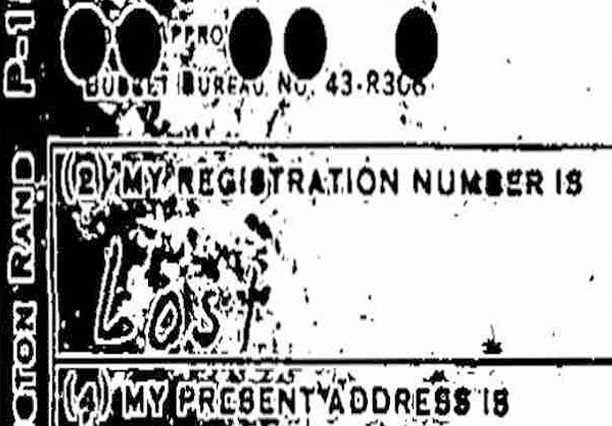
It’s true that the loss of any wallet can be immobilizing, but there exist deeper layers to this misplaced wallet that impacted Cresencio specifically. The wallet in question was not just any bi-fold leather wallet. Rather, it was a seaman’s wallet specifically.
Seaman’s wallets of the 1940s were usually labelled as such and stamped with “U.S.A” or “U.S. Dept. of Commerce; Washington, D.C.,” rendering them a state-issued item carrying the documentation of his labor as well as his permission to be present in the United States. Without it, he is bound to one place.
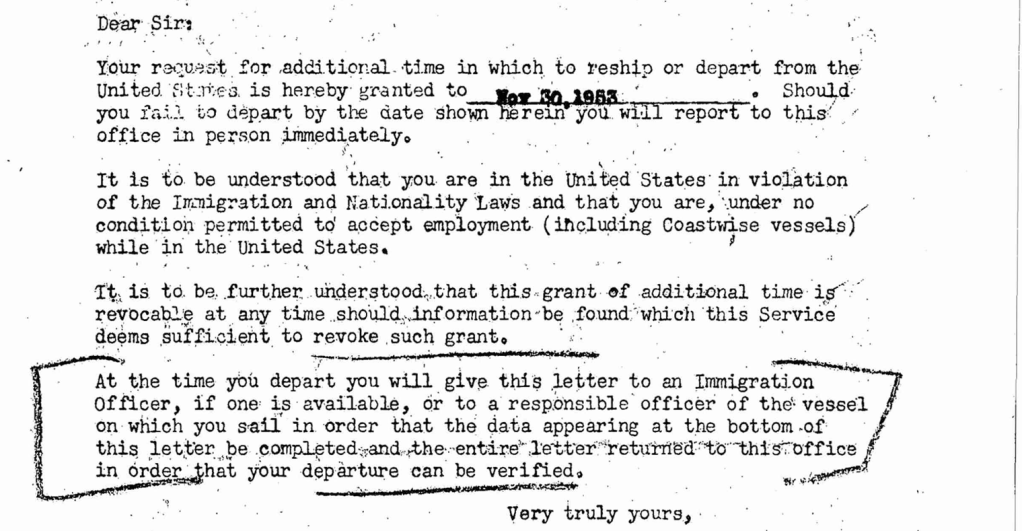
But it was the nature of his job – his relationship to empire as a Filipino colonial national permitted conditional presence – and the section in the Immigration and Nationality Act that required he remain in steady movement.
For a married man and a new father attempting to build a life, letters from INS piling up carried a threatening subtext: We do not want you here to live, much less start a family, unless your labor serves empire and isolates you from any family you attempt to create, any community you attempt to integrate yourself into.
Where some in the city lost earrings or dogs, Cresencio loses his paper everything.
 I Work in New York
Leave a comment